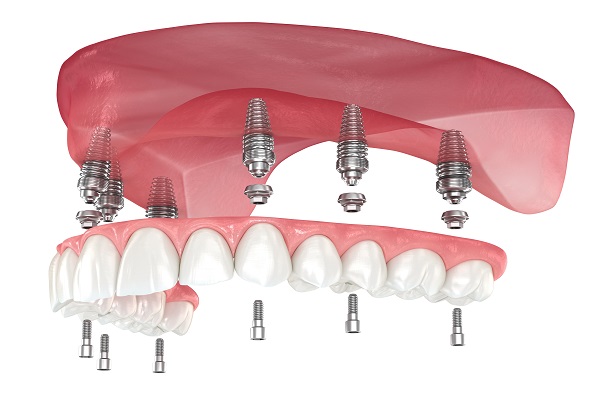
When it comes to replacing a full dental arch with implant supported dentures, patients often have many questions about the process. This article answers some commonly asked questions about implant dentures.
What are implant supported dentures and how are they different?
The structure of implant supported dentures is exactly as the name sounds; a full denture supported by dental implants. The implants are titanium posts placed inside the jawbone to anchor the dentures, thus keeping them stable for dental functions like talking and chewing. This method uses four to six implants placed along the upper or lower jaw. This contrasts with regular dentures, which rely on adhesives and gum suction.
With implant dentures, patients will not have to deal with the discomfort or irritation caused by unstable regular dentures. They can enjoy their regular meals and speak or laugh confidently without worrying about their denture slipping or falling out.
Can I get implant dentures if I already have regular ones?
Even those who have been using regular dentures for several years can still opt for implant supported dentures. They are often the ones who appreciate the remarkable benefits of having a stable dental restoration. In some cases, the dentist can use the existing dentures as a fixed temporary option as the patient recover from implant placement. However, if the patient has been missing their natural teeth for too long, they may have experienced bone loss, meaning a bone graft procedure will be required to place the implants successfully.
What if there are still some natural teeth present?
The people who are qualified to get implant-supported dentures are missing a significant portion of their natural teeth, probably due to multiple dental cavities, untreated gum disease or accidents. The bottom line is that they must have reached a stage where starting afresh with a new dental restoration is advisable. However, if there are still many healthy, natural teeth left on the jaw, the dentist will recommend other alternatives to restore dental function, such as implant-supported bridges, crowns or partial dentures. The goal is always to save natural teeth when possible.
What is healing with implant supported dentures like?
After the insertion of dental implant posts inside the jaw, patients will go through a stage called osseointegration – during which the bone fuses with the implants to ensure the success of the dental restoration process. The implant mimics the function of natural tooth roots. After three to six months, the patient will be ready to get permanent dentures affixed to the implants if everything goes well.
How long do implant dentures last?
Regular dentures can withstand between five to seven years of use before needing repair or replacement with proper care. Implant-supported dentures can survive up to ten years or more without repair or replacement. Those who care for implant retained dentures may even have them for a lifetime.
Are implant dentures your best option?
The only way to be sure you are eligible for implant supported dentures is to meet with the dentist to discuss your needs. The dental professional will be happy to answer any additional questions you may have and help you make a guided decision.
Request an appointment here: https://drcaffeyearle.com or call Smiles By Design at (972) 528-5536 for an appointment in our Flower Mound office.
Check out what others are saying about our dental services on Yelp: Implant Supported Dentures in Flower Mound, TX.
Recent Posts
People with missing teeth can benefit from getting implant supported dentures. These appliances can help improve smiles and oral health. Some people often find them to be more comfortable compared to conventional dentures. But after getting them, it is crucial for people to do all they can to promote healing. Following the dentist's instructions very…
A smile makeover works best with personalized planning and commitment on the part of the patient. Protecting this investment requires proper aftercare. While the dental team delivers quality treatments, the patient needs to take good care of their smile for the results to last. By following the team's aftercare guidelines and practicing good oral hygiene,…
Choosing between a dental crown and a filling depends on the extent of damage and the tooth's strength. A crown offers superior coverage by restoring the entire visible portion of a tooth. At the same time, fillings address smaller areas by sealing decay with materials such as resin composite, amalgam, or porcelain. No matter your…
When a sports-related collision or fall occurs, an emergency dentist helps protect teeth, gums, and the jawbone from lasting harm. Dental trauma often looks minor at first, yet hidden cracks or nerve injuries may develop quickly. Acting fast supports comfort now and better outcomes later. Knowing what first steps to take can make all the…